
Choosing a sauna for recovery? Start with the heat you prefer, then compare the evidence for each type. Traditional and infrared cabins warm you differently, which affects the experience as well as the setup you need at home.
How infrared and traditional saunas differ
A traditional sauna uses a heater to warm the cabin and its occupants. With an appropriate stone heater, water may be added to the stones following your sauna's operating instructions, changing the feeling of the heat. An infrared cabin uses infrared emitters to deliver radiant heat. Its air temperature is often lower, although the experience depends on the particular cabin and settings.
Neither label tells you everything about a sauna. Heater output, bench layout, ventilation, controls and the distance from the emitters all matter. Infrared also does not automatically mean therapeutic red light. A coloured lamp or a red glow is not evidence that a product provides a clinically tested light treatment.
Sauna heat and blood flow
As your body warms, blood vessels in the skin widen and circulation to the skin increases. Your heart rate rises to move that blood. This is a direct response to heat, rather than a claim that a sauna repairs an injury or replaces exercise. Read the heat physiology review.
Infrared sauna and post-exercise soreness
There is some encouraging evidence for infrared heat after exercise, but the studies are small. In a randomised crossover study involving 16 male basketball players, a single infrared sauna session was associated with less reported muscle soreness and better perceived recovery than passive rest. The decline in jump performance was also smaller. That does not establish the same result for every sport, person or home sauna. Read the study in Biology of Sport.
The useful distinction is between feeling more comfortable after a session and proving faster repair of muscle tissue. Those are different outcomes. We do not describe a sauna as a treatment for an injury or promise that it will improve your next workout.
Choose the experience you will actually use
Think about an ordinary weekday. Would you use a compact cabin on your own after work? Do you want room for another person? Have you tried both heating styles and found one more comfortable? These questions are often more helpful than comparing the largest temperature number on a specification sheet.
If you are considering infrared, compare the Core One and Core Three layouts, dimensions and electrical requirements. For traditional heat, look at the Foundry range. Our Forge Two cabin offers traditional and infrared heat. Check its product details and speak to us if you need help understanding the equipment included. A mixed heating system should be chosen for its actual features, rather than an assumption that combining technologies multiplies the health benefits.
Plan the room before choosing the cabin
Measure the intended position and the full delivery route. Doorways, turns, stairs and assembly clearance can determine whether a cabin will work in your home. Allow for the door opening, ventilation and access for servicing, following the model's installation instructions.
Ask a qualified electrician to check the exact unit's power requirements and the proposed location. A voltage option on a listing does not establish that a sauna can use an ordinary household socket. Do not assume an indoor cabin is suitable for a garden installation, even if a lifestyle photograph shows an outdoor recovery space.
For running costs, compare the heater rating with your own electricity tariff and expected use. A simple full-power estimate is kilowatts multiplied by hours multiplied by your tariff per kilowatt-hour. Actual consumption will vary with warm-up, thermostat cycling and conditions. A small cabin is not automatically the cheapest if it is used differently.
Make recovery comfortable and sensible
Heat places demands on the body. Follow your sauna's operating guidance, stay hydrated and leave if you feel unwell. Do not make a longer or hotter session a target. If you have a medical condition, are pregnant or take medication that affects your response to heat, seek advice from a clinician before use.
Be particularly careful about moving directly between sauna heat and cold water. The British Sauna Society explains that these changes affect heart rate and blood pressure and can cause dizziness. Read its sauna and cold-water safety guidance.
Questions before choosing your first home sauna
Is infrared better than traditional sauna for muscle recovery?
There is not enough evidence here to make that broad claim. Small infrared studies are promising for some recovery measures, but they do not prove superiority for every user. Choose with your comfort, practical requirements and health circumstances in mind.
Can I use a sauna after every workout?
Do not treat a sauna session as a compulsory finish to training. How you feel, hydration, the workout and your individual health all matter. Follow product guidance and personalised clinical advice where needed.
Should I choose a sauna or an ice bath first?
Start with the experience that fits your routine and home. Our guide to ice baths after exercise explains the evidence and the trade-off for people focused on muscle growth.
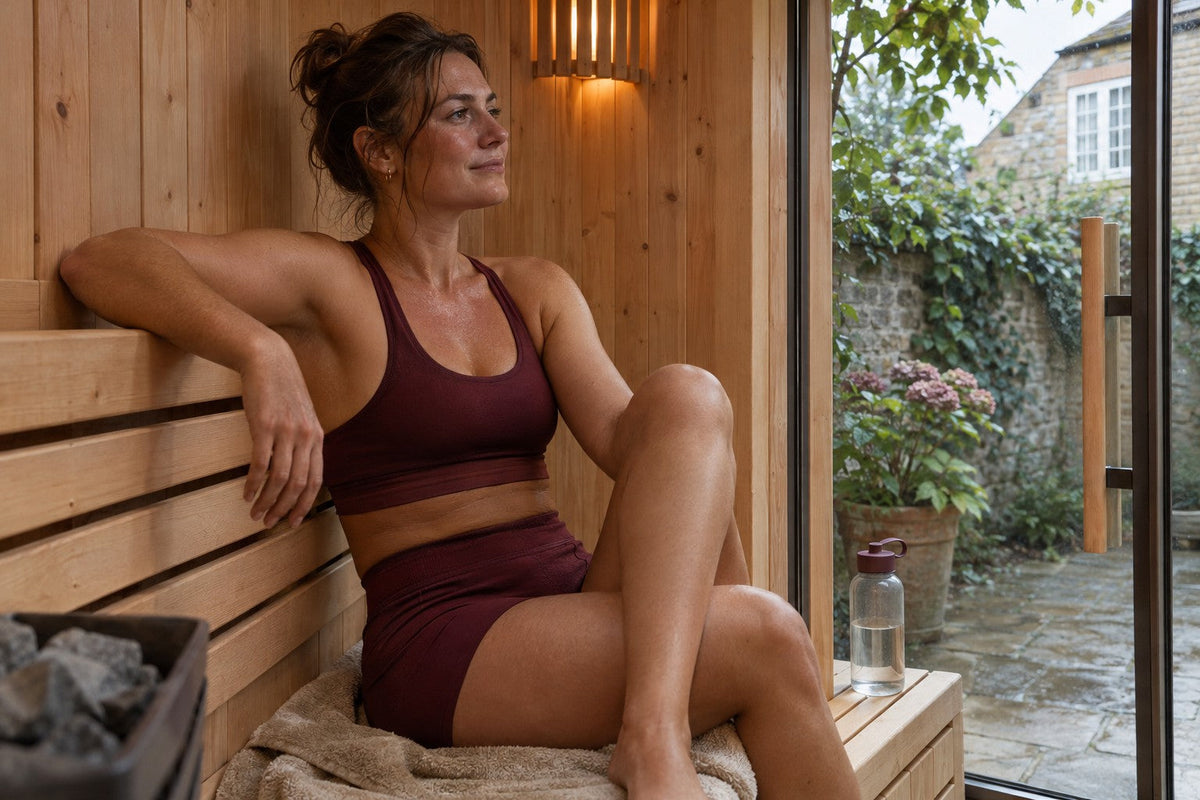
This is general buying and wellbeing information, not personalised medical advice. The editorial image illustrates a home sauna setting and does not show a specific catalogue model.